

The Leading Authority in Strategic Asset Management!
A Principal Author of the International Infrastructure Management Manual (IIMM) between 1995 and 2007
With 43+ years of infrastructure experience, Odysseus-imc brings unmatched expertise in strategic asset management. As principal authors of the globally-recognised IIMM and members of the ISO 55000 review committee, we provide world-class consulting to water utilities, councils, and infrastructure organisations across Australia.
✓ IIMM Principal Authors
✓ In 2026, Strategic Asset Management Committee Member for the IWA for the Oceania region
✓ Strategic Asset Management Committee Member for the AWA
reviewing ISO 55000 for the water industry
✓ Australian Enterprise Awards 2026 Winners
✓ Trusted by the infrastructure industry
Now including our Patreon site:
Drop of Wisdom
Helping councils, water utilities and infrastructure organisations make better long-term decisions about asset performance, risk, lifecycle expenditure and service delivery.
Infrastructure failure rarely begins with a single event. It develops through deferred maintenance, delayed renewals and investment decisions that progressively increase costs, risks and the likelihood of service disruption.
Infrastructure Technical Debt examines these growing challenges and introduces a structured approach to identifying, measuring and managing the financial and operational consequences of underinvestment in infrastructure.
Drawing on more than 40 years of infrastructure management experience, author "Sandy Muir" introduces the Total Technical Debt Index (TTDI), bringing maintenance, renewal, upgrade and risk-related costs into a single, measurable framework. The book provides practical guidance on comparing technical debt across asset classes, prioritising investment according to risk and criticality, demonstrating the financial case for intervention, and developing a phased remediation roadmap.
For councils, water authorities, irrigation organisations and other infrastructure-intensive businesses, technical debt represents more than a maintenance backlog. It is a growing financial and operational liability that can undermine service reliability, increase whole-of-life costs and place additional pressure on future budgets. The book demonstrates how organisations can recognise these liabilities earlier, understand their long-term consequences and establish a more sustainable balance between infrastructure performance, risk and available funding.
Written for asset managers, engineers, executives, finance professionals and elected representatives, this publication bridges the gap between technical asset management and strategic investment decision-making. It provides a practical foundation for moving beyond reactive maintenance towards evidence-based renewal planning, transparent investment priorities and more defensible long-term infrastructure decisions.
The book comes explains the concept, comes complete with examples to assist the reader to calculate technical debt and monitor the debt over time.
Purchase your copy of Infrastructure Technical Debt:
Infrastructure Technical Debt — Making the Invisible Liability Visible


Reliable infrastructure valuations begin with reliable cost information. Yet many organisations continue to rely on fragmented spreadsheets, historical reports and inconsistent unit rates, making it difficult to establish accurate replacement costs, verify information and maintain confidence in asset valuations. These challenges can affect financial reporting, renewal planning and long-term infrastructure investment decisions.
The Odysseus-imc Infrastructure Unit Rate Library provides a centralised, structured and searchable platform for managing infrastructure replacement costs across multiple asset classes. By bringing together unit rates, supporting cost information, source references and historical records, the Library delivers greater transparency, consistency and traceability. It enables organisations to understand where their unit rates originated, how costs have changed over time and whether the information remains appropriate for valuation purposes.
Designed for local government, water authorities, irrigation organisations and infrastructure-intensive businesses, the Library supports asset managers, engineers, valuers and finance professionals in developing more accurate, consistent and defensible infrastructure valuations. With capabilities including structured asset classifications, historical cost tracking, Excel and CSV imports, searchable cost references and reporting, it transforms disconnected information into a reliable foundation for asset valuation and investment planning.
In this video, Odysseus-imc Pty Ltd demonstrates how the Infrastructure Unit Rate Library works and how it can strengthen the quality, transparency and reliability of infrastructure cost information. Discover how your organisation can move beyond fragmented spreadsheets towards a more systematic, evidence-based approach to infrastructure valuations.
Bringing Confidence to Infrastructure Valuations.
To learn more about our tools and how it can support your organisation's asset management and infrastructure investment decisions, please visit the Our Tools page.

Bringing Confidence to Infrastructure Valuations
ENIGMA also makes complex lifecycle information easier to understand through interactive dashboards, condition distribution charts, deterioration curves and financial forecasts. These visualisations help translate detailed asset modelling into meaningful information that can be communicated to asset managers, finance teams, executive management and councillors.
Importantly, the model supports the development of more realistic and sustainable asset management strategies. Rather than simply identifying an accumulated renewal backlog, ENIGMA helps organisations investigate the consequences of funding constraints, evaluate alternative intervention strategies and understand the investment required to maintain or improve the condition of their infrastructure networks.
For councils, road authorities, utilities and other infrastructure-intensive organisations, this means making better use of limited resources. Renewal expenditure can be directed towards interventions that provide the greatest long-term benefit, while the financial and service consequences of alternative investment strategies can be clearly demonstrated and explained.
ENIGMA also strengthens the link between technical asset management and financial planning. By connecting asset deterioration, intervention strategies and funding requirements, it supports the preparation of Asset Management Plans, long-term financial plans, capital works programs and infrastructure investment strategies that are based on transparent and defensible assumptions.
Most importantly, ENIGMA transforms complex lifecycle modelling into a clear and practical investment story. It gives decision-makers the evidence they need to understand what will happen if current funding levels continue, what additional investment could achieve, when intervention is most effective, and how to balance infrastructure performance with financial sustainability.
ENIGMA is more than a lifecycle modelling tool. It is a strategic decision-support platform that helps organisations understand the long-term consequences of today's investment decisions — turning asset data into smarter interventions, sustainable renewal programs and better infrastructure outcomes.
To learn more about ENIGMA and how it can support your organisation's asset management and infrastructure investment decisions, please visit the Our Tools page.

Smarter Lifecycle Planning.
Managing transport infrastructure effectively requires more than understanding asset condition and identifying renewal needs. The real challenge is determining when assets should be renewed, how funding should be allocated, and how today's investment decisions will influence future network performance, service levels and long-term financial sustainability.
The ENIGMA Transport Lifecycle Planner transforms asset condition data, deterioration modelling and financial information into practical, evidence-based investment intelligence. By combining predictive lifecycle modelling, configurable intervention strategies, renewal forecasting and funding scenarios, ENIGMA enables organisations to move beyond reactive maintenance and traditional renewal planning towards a structured, proactive and financially sustainable approach to infrastructure management.
Instead of relying on static condition assessments or historical expenditure patterns, ENIGMA helps organisations understand how assets will deteriorate over time, when intervention will deliver the greatest benefit, and how different investment strategies will influence future asset condition and expenditure requirements. This provides a clear basis for developing defensible maintenance, rehabilitation and renewal programs.
The model demonstrated in the video focuses on transport infrastructure, showing how asset condition, deterioration curves, intervention thresholds and renewal budgets can be brought together within an interactive lifecycle planning environment. ENIGMA allows users to examine alternative funding levels, adjust treatment strategies and forecast the consequences of different investment decisions over extended planning periods.
A key strength of ENIGMA is its ability to compare alternative investment scenarios. By adjusting renewal budgets, intervention triggers and lifecycle assumptions, organisations can assess how different strategies affect network condition, renewal demand, future expenditure and overall asset performance. This provides decision-makers with a clearer understanding of the relationship between investment, asset deterioration and long-term service outcomes.
Managing asset risk effectively requires more than knowing which assets are in poor condition. The real challenge is understanding which assets are most critical, where failure would have the greatest consequence, and where investment should be directed first.
The ENIGMA Criticality & Risk Model transforms asset data into practical, evidence-based risk intelligence. By combining asset criticality, condition, consequence and configurable weighting criteria, ENIGMA enables organisations to move beyond subjective prioritisation towards a structured and defensible approach to risk-based asset management.
Instead of relying on a single condition score or broad judgement, ENIGMA helps organisations understand why an asset is critical, how its risk compares with others, and what factors are driving that result. This provides a clear basis for prioritising maintenance, renewal and capital investment.
While the model demonstrated in the video uses a building portfolio, ENIGMA is designed to cater for all asset classes. The same framework can be applied across roads, bridges, drainage, buildings, water infrastructure, irrigation systems, mechanical and electrical assets, communications, parks and recreation assets, and specialised operational infrastructure.
The model also provides transparency around how priorities are developed. Criteria and weightings can be adjusted, alternative scenarios can be tested, and sensitivity analysis can be undertaken to understand how changes in assumptions affect the outcome. Monte Carlo analysis can also be used to test the stability of criticality classifications, providing further confidence in the results.
ENIGMA also supports stronger data governance by identifying gaps, inconsistencies and missing information within the underlying asset data. This helps organisations improve the quality of their asset information while creating a clear and auditable basis for decision-making.
For councils, utilities and other infrastructure-intensive organisations, this means better use of limited resources. Funding can be directed towards the assets where failure would have the greatest impact, while investment decisions can be clearly explained and defended.
Most importantly, ENIGMA turns complex asset risk information into a clear and practical investment story. It provides decision-makers with the evidence they need to understand what matters most, why it matters, where the greatest risks exist and where intervention will deliver the greatest benefit.
ENIGMA is more than a risk model. It is a decision-support platform for turning asset information into better investment decisions — across every asset class.
To learn more about ENIGMA, please check out our Our Tools page.

One Risk Framework.
Every Asset Class.
Predict for Tomorrow.
Invest Smarter Today!
Managing a large building portfolio is no longer simply about knowing the condition of assets today. The real challenge is understanding what will happen next, when intervention is required, what it will cost, and where limited funding will deliver the greatest value.
The ENIGMA Buildings Predictive Model transforms asset data into practical, forward-looking intelligence. By modelling asset condition, deterioration, lifecycle requirements, risk and future investment needs, ENIGMA enables organisations to move beyond static condition assessments and reactive maintenance towards a structured, evidence-based approach to long-term asset management.
Instead of relying on broad assumptions or replacing assets simply because they have reached a nominated age, ENIGMA helps identify when individual assets are likely to deteriorate, when intervention provides the greatest benefit, and what happens if investment is delayed. This allows asset managers, executives and decision-makers to clearly understand the consequences of different funding strategies before those decisions are made.
The result is a stronger basis for developing renewal programs, long-term financial forecasts, maintenance strategies and capital investment priorities. Different funding scenarios can be tested to demonstrate how investment decisions affect future condition, risk, service performance and expenditure across the portfolio.
For councils, utilities and other infrastructure-intensive organisations, this means better use of scarce resources. Funding can be directed towards the assets that need it most, at the point in their lifecycle where intervention delivers the greatest value, rather than simply responding to the loudest problem or the most immediate failure.
Most importantly, ENIGMA turns complex asset information into a clear and defensible investment story. It provides decision-makers with the evidence they need to explain what needs to be funded, when it needs to be funded, why it matters and the consequences of doing nothing.
ENIGMA is more than a predictive model. It is a decision-support platform for turning asset knowledge into better investment decisions — helping organisations reduce lifecycle cost, manage risk, improve service outcomes and build a more sustainable asset portfolio.

Committee appointments, new publications, conference sessions, and the analytical tools we build and make available to practitioners — our announcements page is where we post news as it happens. Most recently, Sandy Muir joined the IWA Strategic Asset Management Committee as Oceania Representative for the 2026–2028 term.


Odysseus IMC helps councils, water utilities and infrastructure organisations make confident, defensible decisions about their assets. With decades of practical experience and deep involvement in leading asset management guidance, we bring strategy, lifecycle thinking and real-world implementation together.
Infrastructure organisations are under increasing pressure to maintain service levels, manage ageing assets, justify renewal funding and respond to growing risk. Too often, asset data is fragmented, priorities are unclear, and investment decisions are difficult to explain to executives, boards and communities.
We help solve these problems by turning asset information into clear priorities, practical improvement programs and long-term investment strategies. Our focus is on improving decision-making, reducing risk and ensuring limited funding is directed to the right assets at the right time.
Our consulting services include Asset Management Strategies, Strategic Asset Management Plans, Asset Management Plans, ISO 55001 and maturity assessments, lifecycle modelling, renewal forecasting, risk and criticality assessment, data and systems improvement, and asset management improvement planning.
Odysseus IMC operates at the leading edge of contemporary asset management practice, combining proven international thinking with practical infrastructure experience. For our clients, this means stronger governance, clearer investment priorities, improved risk management and greater confidence in long-term funding decisions. For their customers and communities, it means more reliable services, better value for money, improved resilience and infrastructure that is managed sustainably over the long term.
Whether you need to strengthen governance, prepare a defensible renewal program or improve your overall asset management capability, Odysseus IMC provides practical, experienced advice tailored to your organisation.
Talk to us about how we can help you achieve better asset management outcomes.
Strategic Infrastructure Asset Management That Delivers Better Decisions
Industry Sectors


Government
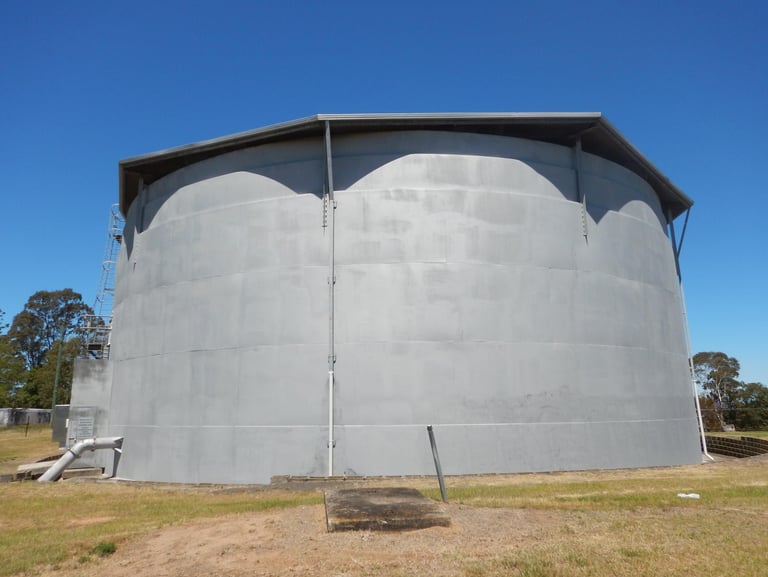
Water






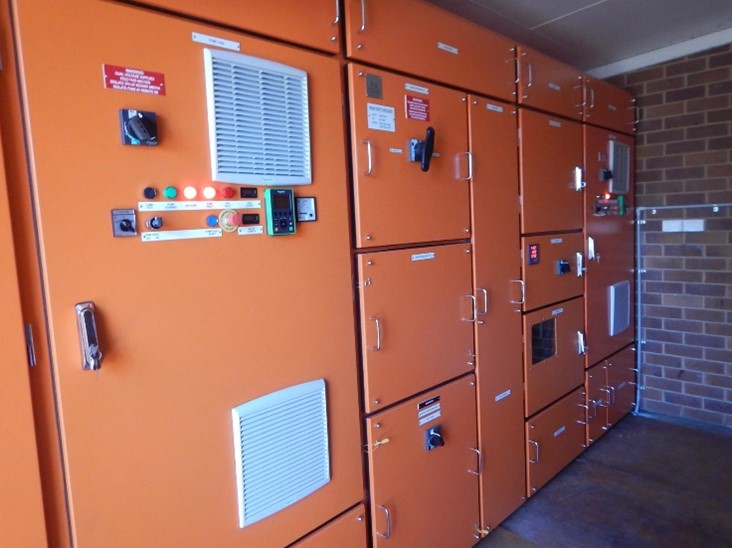


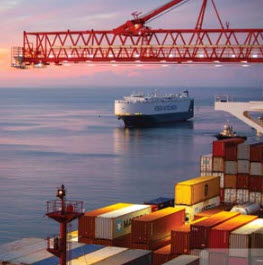
Ports
Health
Private Sector
Power
Alpine Resorts
Arts
Parks and Recreation
Wastewater


Railways


Irrigation
Our Associates
Contacts
Odysseus-imc Pty Ltd
✉️ sm@odysseus-imc.com
🌐 www.odysseus-imc.com
59 Mandalay Circuit
Beveridge, Victoria
Australia, 3753
Socials
Subscribe to our newsletter
Work: (+61) 3 8103 7011
Mobile: (+61) 433 825 658
Business Info
ABN: 52 290 836 018
ACN: 116 796 019
Credentials
• 'A Principal Author of the IIMM between 1995 and 2007'
• IIMM Principal Authors
• Strategic Asset Management Committee Member for the IWA for the Oceania
region
• Strategic Asset Management Committee Member for the AWA reviewing ISO
55000 for the water industry
• Australian Enterprise Awards 2026 Winners